Understanding Removal from Sanctions Lists: A Comprehensive Guide
The issue of Removal from Sanctions Lists is crucial for individuals and entities affected by international sanctions. Sanctions can severely impact financial standing, reputation, and operational capabilities. Understanding how to navigate the complex landscape of sanctions and the process for removal is imperative for those seeking to regain their standing in the global arena.
What Are Sanctions Lists?
Sanctions lists are official documents issued by governments or international bodies that identify individuals, organizations, and countries subject to specific restrictions. These sanctions can stem from various issues including national security concerns, human rights violations, or foreign policy objectives. The lists can vary globally, often implemented by the United Nations, the European Union, or individual countries like the United States. Sanctions typically include asset freezes, trade restrictions, and travel bans, affecting economic activities and personal freedoms.
Understanding the Need for Removal
Once placed on a sanctions list, the implications are severe. Individuals or organizations may experience difficulties in accessing financial services, entering into contracts, or engaging in international travel. Consequently, the process of seeking removal from such lists becomes paramount. Achieving delisting can restore an individual’s or organization’s ability to conduct business and engage in the global economy.
Legal Framework Surrounding Sanctions
The legal framework governing sanctions varies by jurisdiction. For instance, the U.S. uses the Office of Foreign Assets Control (OFAC) to manage its sanctions list, while the EU has its own regulatory framework to implement sanctions. Legal representation becomes crucial in these situations, as navigating the complexities of international law and compliance obligations requires expertise. Legal professionals can guide individuals or organizations through the necessary legal channels and help present a compelling case for removal.

Steps Toward Removal from Sanctions Lists
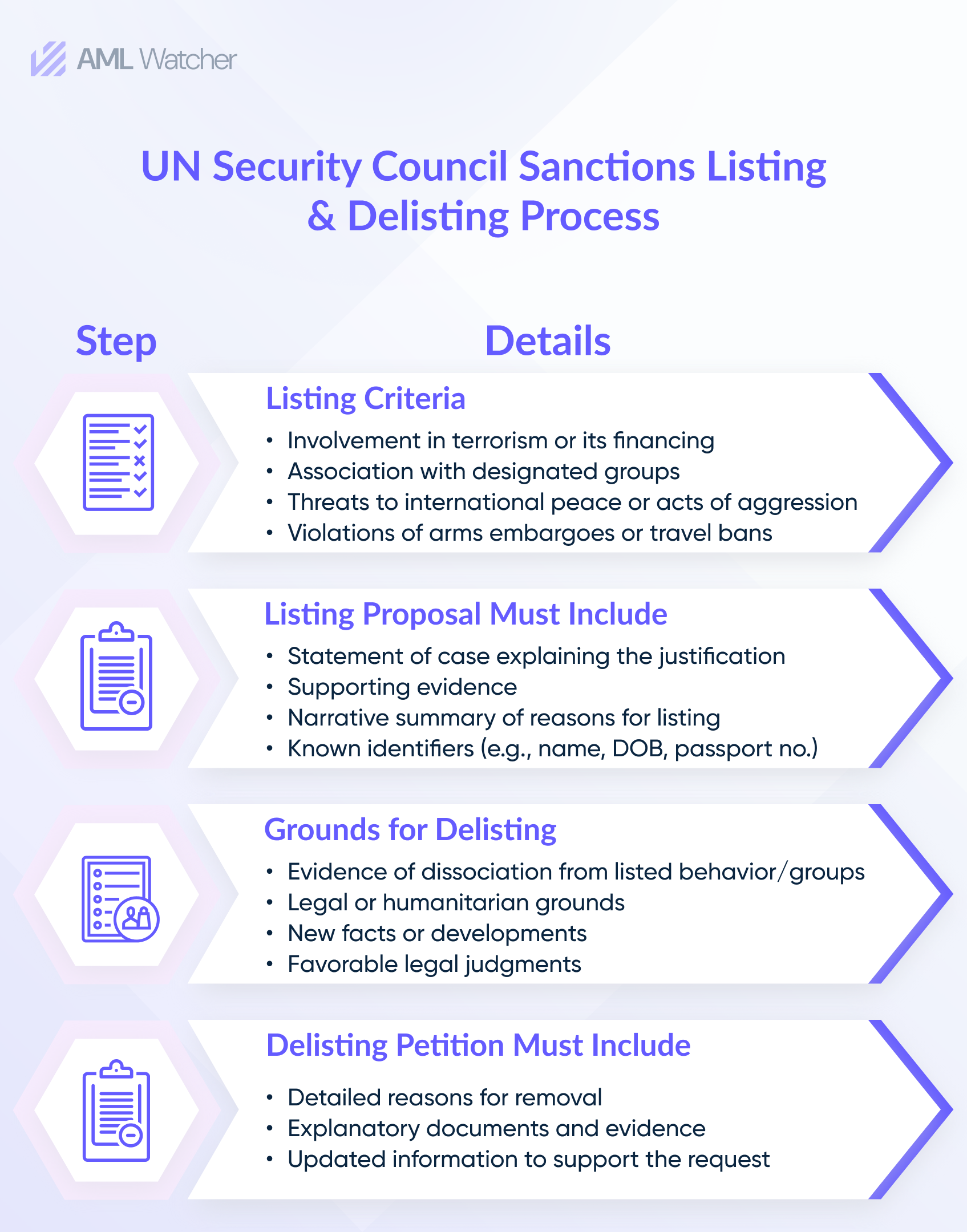
The path to removal involves several steps:
- Assessment: The first step is to assess the reasons for inclusion on the sanctions list. Understanding the specific allegations or designations can guide the strategy for delisting.
- Gathering Evidence: Compile evidence to counter the claims leading to the sanctions. This might include documentation demonstrating compliance with legal standards, proof of good conduct, or evidence of changes in circumstances since the imposition of sanctions.
- Legal Consultation: Engage with legal professionals specializing in sanctions law. Their expertise can provide valuable insights into the legal avenues available for challenging the sanctions.
- Filing for delisting: Depending on the sanctions authority, submit a formal request for removal. This process often involves detailed legal submissions, outlining why the sanctions should be lifted.
- Negotiation and Follow-up: Depending on the response from the sanctions authority, there may be a negotiation phase. Be prepared for additional inquiries or requests for further evidence.
Common Challenges in the Delisting Process
The delisting process is fraught with challenges. One significant issue is that the burden of proof often lies with the individual or organization seeking removal. They must demonstrate why they no longer meet the criteria for sanctions. Additionally, some countries have a reputation for being less transparent in their decision-making processes, causing frustration for those trying to navigate the system. Legal proceedings can be protracted, leading to prolonged uncertainty and financial strain.
Importance of Public and Community Support
Gaining public and community support can also play a role in the delisting process. Advocacy from reputable organizations, communities, or local governments can enhance the credibility of the removal request. Public opinion can influence decision-makers, making it essential to engage with stakeholders who can amplify the individual’s or organization’s case.
Conclusion
The journey toward removal from sanctions lists is complex and multifaceted, often requiring legal expertise and strong advocacy. Understanding the reasons for sanctions, preparing a robust case, and seeking the right legal assistance are critical components of this process. Although challenging, with the right approach and support, individuals and organizations can successfully navigate these hurdles and work towards regaining their rightful position in the global community.